Brush Clearing vs. Landscaping for Native, Fire-Safe Lots
Have a native lot with rabbitbrush, junipers, and cheatgrass? Learn when you need brush clearing instead of traditional landscaping to keep your property clean and fire-safe.
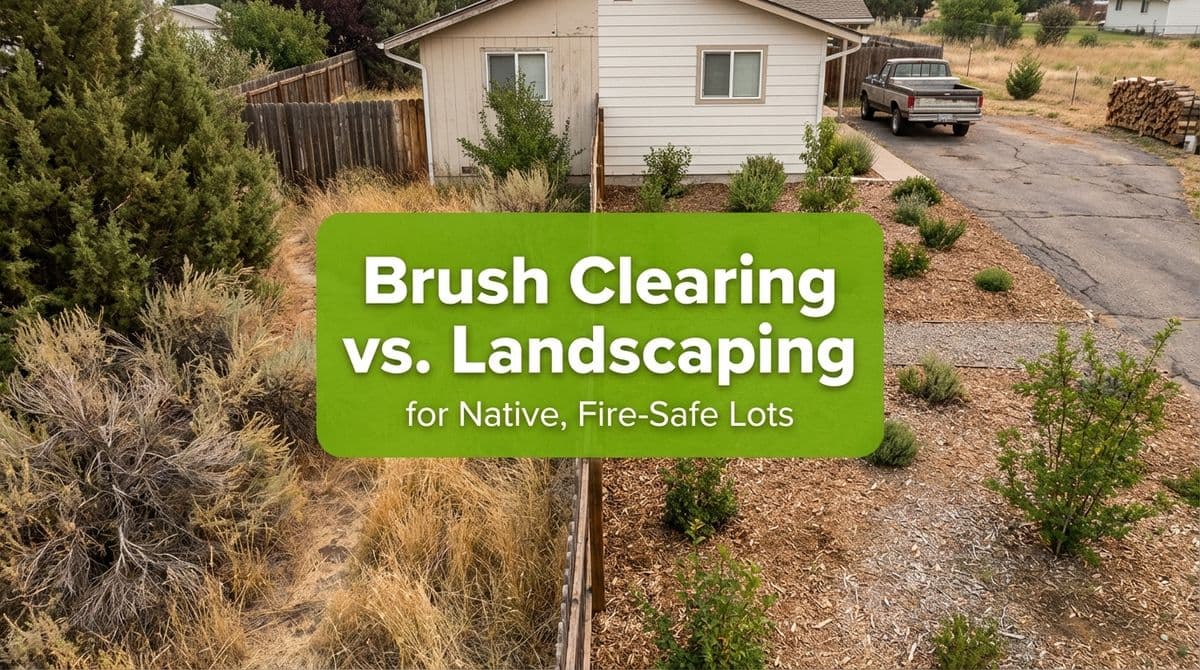
When a “Natural” Yard Needs More Than Traditional Landscaping
We recently got a call from a homeowner — let's call him Mike — who had a problem a lot of Central Oregon folks run into.
Mike lives on about a half-acre corner lot with no lawn at all. His place is all native: rabbitbrush, young junipers, cheatgrass, and the usual mix of high-desert plants. It had been a couple of seasons since his weed eater gave out, and everything had gotten overgrown — especially inside the fence and along the road.
He told us he was looking for a “spring cleanup” and wondered if we could do some weed eating, thin the rabbitbrush, and take out a few small juniper sprouts. After pulling up his property on Google Earth, we had to be honest with him: what he really needed wasn’t traditional landscaping at all. It was brush clearing and fire hazard mitigation.
That conversation with Mike is exactly why we wanted to explain the difference between brush clearing and traditional landscaping — and how to get an overgrown native lot cleaned up in a way that’s both fire-safe and native-friendly.
Brush Clearing vs. Traditional Landscaping: What’s the Difference?
When most people search for “spring yard cleanup,” they’re thinking of what we’d call traditional landscaping services:
- Mowing and edging lawns
- Pruning shrubs and ornamental trees
- Mulching beds and raking leaves
- Weeding flowerbeds and adding plants
That’s the kind of work most landscape crews are set up for. We’re using lawn mowers, string trimmers, hedge trimmers, and smaller tools on managed yards with turf and ornamental plantings.
Mike’s place was different. His lot is basically a slice of Central Oregon sage and juniper, just with a house and fence in the middle. For properties like his, the primary goal isn’t curb appeal — it’s access, safety, and fire resistance. That’s where brush clearing comes in.
What Brush Clearing Really Involves
Brush clearing (often called fire fuel reduction or fire hazard mitigation) is focused on removing or reducing the plants that help a wildfire spread, especially close to your home.
Depending on your lot, that can include:
- Heavy weed and grass reduction – cutting down dense cheatgrass and tall weeds across larger areas
- Thinning shrubs like rabbitbrush – spacing them out so fire can’t easily jump from one to the next
- Removing small or “volunteer” trees – especially young junipers growing under or between larger plants
- Removing dead and down material – branches, piles of twigs, and dry debris that act like kindling
- Creating defensible space – a buffer around your home with lower, more widely spaced plants
To do this safely and efficiently, brush crews often use heavier equipment than a typical landscape truck carries: brush hog mowers, skid steers with forestry attachments, heavier-duty trimmers, and sometimes even chippers for on-site debris processing.
How to Make a Native Lot Fire-Safe Without “Uglying It Up”
One of Mike’s concerns — and one we hear all the time — is, “I want it cleaned up, but I still like the natural look. I don’t want a golf course; I just don’t want a tinderbox.”
That balance is absolutely possible. Here’s how we generally recommend approaching a native, overgrown lot:
1. Start Closest to the House (0–30 Feet)
This zone is your highest priority. In a wildfire, this is the area that makes the biggest difference.
- Keep grasses and weeds very low (a few inches at most).
- Remove rabbitbrush and shrubs that are right up against siding or decks.
- Cut back or remove juniper sprouts under windows or near wood fences.
- Clear out anything dead and dry — old branches, piles of needles, stacked lumber.
You can still keep some native plants here, just keep them low, healthy, and spaced out.
2. Thin and Space Plants (30–100+ Feet)
As you move farther out, the goal is to interrupt continuity — in other words, don’t let fire have a solid carpet or wall of fuel.
- Leave some rabbitbrush and natives, but create gaps between them.
- Remove clusters of juniper seedlings and low branches that could ladder fire up into crowns.
- Keep cheatgrass and tall weeds cut down regularly during the growing season.
In this zone, you’re aiming for a more “open woodland” look rather than a dense thicket.
3. Don’t Forget Fence Lines and Road Edges
Like Mike, many homeowners want the area just outside their fence and along the road cleaned up too. Those strips of dry grass and brush are exactly how a roadside spark can turn into a yard fire.
- Ask your brush-clearing contractor to include at least a few feet outside your fence.
- Keep vegetation lower along driveways and road frontages.
- If you have wooden fencing, be especially careful about tall, dry grass growing right against it.
Who You Should Be Calling (And What to Ask For)
When Mike first called, he’d been searching online for “spring cleanup” and “yard maintenance,” and was understandably frustrated that so many companies (us included) were geared toward lawns and formal landscaping.
If your property sounds like his — no lawn, mostly native brush and trees, with things getting overgrown — you’ll have better luck searching for:
- Brush clearing
- Fire fuel reduction
- Fire hazard mitigation
- Defensible space services
- Forestry mulching (for larger rural lots)
When you call, mention specifics like:
- Lot size (e.g., “about a half-acre”)
- That you have no lawn, just native vegetation
- Issues like rabbitbrush, juniper sprouts, and cheatgrass
- Whether you want inside-the-fence only or outside edges and road frontages included
Where Traditional Landscaping Still Fits In
Once you’ve had a proper brush clearing and fire-safety tune-up, traditional landscaping can still play a role, especially closer to the house.
Many homeowners choose to:
- Add a small, low-maintenance planting area near the front entry
- Use gravel or stone paths to break up vegetation and create fire-safe walkways
- Have a landscaper do light seasonal touch-ups after the heavy brush work is done
Think of it as a team effort: the brush-clearing pros handle the heavy, fire-focused work, and a landscape crew can help keep the space looking intentional and welcoming.
Not Sure Which You Need? Here’s a Simple Test
Ask yourself two questions:
- Do I have more “wild” native growth than lawn?
- Am I more worried about fire risk and overgrowth than perfect edging and flowerbeds?
If you answered yes to either one, you’re probably looking for brush clearing first, landscaping second.
And if you’re ever unsure, give us a call. Just like we did with Mike, we’re happy to take a quick look (even virtually), be upfront about what you actually need, and point you toward the right kind of service to get your native lot cleaned up, safe, and still true to the landscape we all love.