Lawn Aeration vs. Dethatching: What Your Yard Really Needs
Confused about lawn aeration vs. dethatching? Learn what each service does, how they work, and when your yard truly needs them to stay thick and healthy.
“You’re Going to Have to Explain What That Is for Me…”
We recently got a call from a homeowner — let’s call her Nicole — who had reached out over the weekend for a lawn aeration quote. When we pulled up her request, we saw she was hoping to squeeze in aeration before the end of the week and was also curious about whether she needed anything else done.
As we walked her through the quote, we asked if she wanted dethatching as well. She paused and said, “You’re going to have to explain what that is for me.” That’s a much more common question than you might think.
That conversation is a perfect example of the confusion we see all the time: What’s the difference between lawn aeration and dethatching, how do they work, and when does a yard actually need each service? Let’s unpack what we explained to Nicole, so you can decide what your own lawn really needs.
What Lawn Aeration Is (and What It Actually Does)
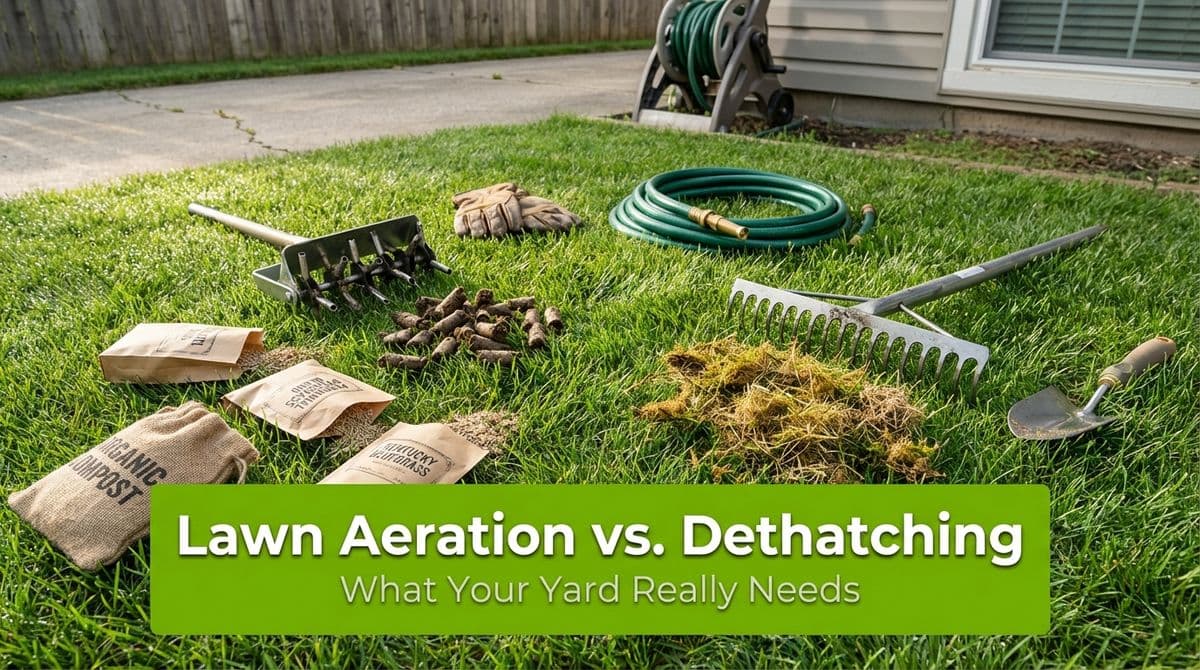
When Nicole first called, she already knew she wanted aeration. Aeration is the service where we run a machine over the lawn that pulls out small “plugs” or cores of soil and grass. If you’ve ever seen little dirt cylinders scattered across a lawn, that’s the result of core aeration.
Over time, soil gets compacted from foot traffic, mowing, pets, and even just settling. Compacted soil makes it hard for air, water, and nutrients to reach the roots of your grass. Aeration loosens things up, creating channels for roots to grow deeper and stronger.
In Nicole’s case, we recommended doing aeration along with overseeding and fertilizing in one visit, which is what we usually do. Those freshly opened holes are perfect spots for grass seed and fertilizer to get down into the soil where they can actually make a difference.
Key Benefits of Aeration
- Reduces soil compaction so roots can expand
- Improves water absorption and drainage
- Helps fertilizer work more effectively
- Encourages thicker, healthier turf over time
- Creates ideal conditions for overseeding
What Dethatching Is (and How It’s Different)
When we brought up dethatching, Nicole admitted she had no idea what that meant. That’s where we drew the distinction between the two services.
Dethatching focuses on a completely different part of your lawn: the thatch layer. Thatch is the layer of dead and decaying grass stems, roots, and organic material that sits right at the base of the grass, on top of the soil. A thin layer of thatch (about 1/4"–1/2") is normal and even helpful, because it cushions the soil and helps with moisture retention.
The problem is when that layer gets too thick. When thatch builds up, it acts like a barrier. Water, air, and nutrients get stuck above the soil, and roots start growing in the thatch instead of in the soil. That’s when lawns start to look dull, struggle in heat, and thin out, even if you’re watering and fertilizing.
Dethatching uses special equipment (or in smaller areas, manual rakes) to pull up and remove that excess layer of dead material so your lawn can “breathe” again.
Key Benefits of Dethatching
- Removes the dense layer of dead grass blocking water and nutrients
- Helps new grass shoots emerge more easily
- Reduces disease and pest habitat in thick thatch
- Improves the effectiveness of watering and fertilizing
- Prepares the lawn for overseeding or renovation
Aeration vs. Dethatching: How They Work Together
During Nicole’s call, we explained that aeration and dethatching solve different problems:
- Aeration relieves compacted soil.
- Dethatching removes excess dead material sitting on top of the soil.
Some lawns only need one service; others benefit from both at different times. For many homeowners, dethatching is only needed about once every three years, depending on watering, mowing height, and grass type. Aeration is more frequent — often every year for high-traffic or compacted yards.
Pros and Cons of Each Service
- Aeration – Pros: Gentle on existing turf, great for overseeding, boosts root growth, improves soil health.
- Aeration – Cons: Doesn’t fix heavy thatch; results can be slower if the lawn is severely neglected.
- Dethatching – Pros: Quickly removes buildup, opens the surface for new growth, can restore tired lawns.
- Dethatching – Cons: Can look rough immediately after, may stress weak grass, usually not needed every year.
How to Tell Which Service Your Yard Needs
On the phone with Nicole, we talked through a few quick checks she could do to understand her lawn’s condition. You can use the same tests at home.
Signs You Need Aeration
- Water puddles or runs off instead of soaking in
- Grass looks thin in high-traffic areas (play areas, paths, pet spots)
- Soil feels hard, and it’s difficult to push a screwdriver or small stake into the ground
- Roots are shallow when you pull up a small plug of turf
Signs You Need Dethatching
- Spongy or bouncy feeling when you walk on the lawn
- Visible layer of brown, stringy material at the base of grass
- Thatch layer thicker than about 1/2" when you cut a small wedge of turf
- Green grass blades struggling to push through old, dead material on top
When to Schedule Aeration and Dethatching
For Nicole, we were near the end of our aeration window for the season, so we talked about timing. The “right” timing depends on your grass type, but these general guidelines help:
Cool-Season Grasses (like fescue, bluegrass, rye)
- Aeration: Early fall is ideal; spring can work if needed.
- Overseeding: Often done the same day as fall aeration.
- Dethatching: Early fall or early spring, when the grass is actively growing and can recover.
Warm-Season Grasses (like Bermuda, zoysia, St. Augustine)
- Aeration: Late spring to early summer, once the lawn is fully green and growing.
- Dethatching: Late spring or early summer during peak growth.
We usually group aeration, overseeding, and fertilizing together on the same visit, just as we suggested to Nicole. Dethatching, when needed, is often scheduled ahead of heavy feeding or overseeding so the lawn can take full advantage of the treatments.
Common Questions We Hear from Homeowners
Can I aerate or dethatch my lawn myself?
It’s possible to do both as DIY projects. Rental stores often have core aerators and dethatchers available. That said, the machines are heavy, and improper use can damage irrigation heads, shallow utilities, or the lawn itself. Many homeowners call us after one attempt and decide it’s a job they’d rather outsource in the future.
Will dethatching damage my lawn?
Dethatching can look a little alarming right after it’s done. The lawn may appear beat up or thin for a short period. As long as it’s done at the right time of year and followed with proper watering and, in many cases, overseeding and fertilizing, the lawn usually comes back thicker and healthier than before.
How often should I aerate and dethatch?
We typically recommend aeration once a year for most lawns, especially if there’s regular traffic or clay-heavy soil. Dethatching is more occasional — often every three years or so, depending on how quickly thatch builds up on your particular lawn.
Not Sure What Your Lawn Needs? We’re Happy to Take a Look.
By the end of our call, Nicole understood that aeration would help loosen her compact soil and set the stage for overseeding and fertilizing, while dethatching would only be necessary if thatch had built up beyond a healthy level.
If you’re standing in your yard wondering whether you need aeration, dethatching, both, or neither, you’re not alone. We’re happy to take a look, talk through what we see, and put together a plan that matches your lawn’s actual condition — not just the season’s latest trend.