Lawn Care for Rental Properties Landlords Can Trust
Learn how we helped a landlord revive a dead rental lawn and keep it HOA-friendly with tenant-proof maintenance strategies you can use on your own properties.
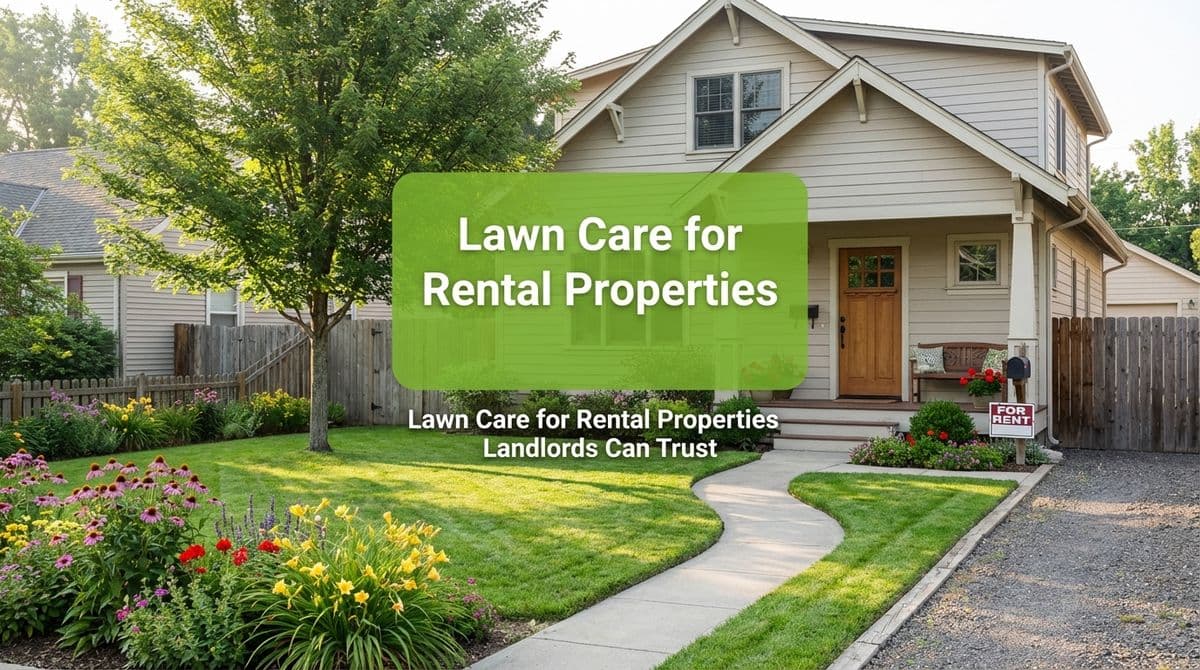
When Tenants Let the Lawn Die: A Rental Story We See All the Time
We recently got a call from a customer — let's call him Ryan — who owns a single-family rental in an HOA neighborhood. The previous tenants had let the sprinklers sit off all summer, ignored the leaves, and by the time they moved out, the once-green front yard was basically toast.
Ryan told us the front lawn was only about 700 square feet, but the HOA required it to be green and presentable. The back yard, on the other hand, was a leaf-filled, likely dog-poop-filled mess he just wanted cleaned up for the new tenants moving in at the end of March. He’d tried having tenants maintain the lawn themselves, and it backfired — now he was debating whether to “force” professional lawn care into the lease.
We work with a lot of landlords and property managers in this exact situation, so we thought it would be helpful to share how we approached Ryan’s rental — and what you, as a landlord, can do to keep your yards green, HOA-friendly, and as tenant-proof as possible.
Step 1: Get the Property Back to “Rentable” Shape
The first priority with a neglected rental yard is always cleanup. For Ryan, that meant a spring cleanup of leftover fall leaves in both the front and back, plus evaluating what it would take to bring the dead front lawn back.
On most rental properties like this, we recommend:
- Full debris cleanup: Remove leaves, branches, trash, and pet waste so we can actually see what we’re working with.
- Lawn health check: Is the grass totally dead, or just thin and stressed? Is there compacted soil, thatch buildup, or bare dirt?
- Irrigation check: Confirm zones, coverage, and whether the system has been off or damaged. In Ryan’s case, the sprinklers simply hadn’t been turned on for a full season.
Only after that inspection can we say whether a simple overseed will do, or if we’re talking about adding soil, dethatching, aeration, or even cutting out and replacing sections of sod.
Overseeding vs. Starting Over: What Rentals Usually Need
Ryan’s question to us was one we hear often: “Does it just need a dethatch and aeration, or something more?” For small front lawns in rentals, we usually try the least invasive, most cost-effective path that will still meet HOA standards.
Our general approach looks like this:
- If the lawn is patchy but not gone:
- Dethatch if there’s a spongy layer of old grass.
- Core aerate to relieve compaction from foot traffic and pets.
- Add a thin layer of topsoil or compost in bare spots.
- Overseed with a grass blend that fits your region and sun exposure.
- If the lawn is truly dead or mostly dirt:
- Evaluate whether existing “lawn” should be removed.
- Bring in fresh soil to correct grading and improve root depth.
- Seed or sod, depending on budget and move-in timeline.
For landlords, the key is to balance initial repair cost against how quickly you need it to look good for photos, showings, and HOA inspections. Sod is faster; overseeding is cheaper but needs time and consistent watering.
Why Professional Maintenance Beats Leaving It to Tenants
Like Ryan, many landlords start out letting tenants handle lawn care. That works sometimes, but when it doesn’t, you end up with dead turf, HOA violations, and a yard that’s harder to rent out. That’s why so many of our rental clients eventually switch to owner-provided professional maintenance.
Here’s what usually pushes landlords in that direction:
- Consistency: We show up weekly from March through November, not “when someone feels like it.”
- HOA compliance: We keep grass within height requirements, edges clean, and beds weeded so you’re not chasing notices and fines.
- Full-service routines: Our rental clients typically get spring and fall cleanups, fertilizer, irrigation turn-ons and blowouts, and weekly mowing bundled together. You don’t have to remember seasonal tasks — they just happen.
- Less tenant conflict: Tenants don’t have to own a mower or guess how to fix sprinklers. You avoid arguments about whose fault a dead lawn is.
With Ryan, we put together two quotes: one to restore and clean up the property, and another for recurring maintenance that would keep the front lawn green and HOA-compliant without him lifting a finger.
Structuring Lawn Care in Your Lease
Once landlords see the costs of fixing a neglected yard, many want to tighten up their leases. We’re not attorneys, but from working with lots of rentals, we see a few approaches that work well:
- Owner-provided lawn care (our most common): You hire us, pay the bill, and bake that cost into the rent. The lease clearly states tenants are not to modify irrigation or cancel service.
- Tenant care with clear standards: If you still want tenants to handle it, spell out expectations: “Sprinklers must be used; lawn must remain green and mostly weed-free; leaves raked at least monthly in fall,” etc.
- Damage recovery: Like Ryan, many landlords ask us for documented quotes or invoices so they can reasonably bill previous tenants for lawn damage that violated their lease.
Whatever route you choose, the more specific your lawn language is, the easier it is to enforce — and the less likely you are to be left with a dead yard between tenants.
Making Rental Yards More “Tenant-Proof”
We also like to think about long-term durability. Not every square foot needs to be lawn, especially in back yards that get heavy use from kids and dogs.
Here are some upgrades that can make your rental lower-maintenance and more tenant-proof:
- Shrink the lawn footprint: Keep a small, HOA-pleasing front lawn and use rock, mulch, or low-maintenance plants elsewhere.
- Durable hardscape in back: Patios, gravel sitting areas, or defined dog zones stand up better than wall-to-wall turf.
- Simple, smart irrigation: Timers with clear labeling (“Front Lawn,” “Back Beds”) and locked settings reduce the odds of someone turning everything off for a year.
With Ryan, the priority was a green, tidy front lawn for the HOA, and a clean, safe back yard for the new tenants — not necessarily a magazine-cover landscape. That’s the sweet spot for most rentals.
Need Help With a Neglected Rental Lawn?
If you’re staring at a dead front yard, leaf piles, or a mud pit left behind by previous tenants, you’re not alone. We help landlords and property managers every season with cleanup, lawn restoration, and set-it-and-forget-it maintenance plans that protect their investment and keep HOAs happy.
Whether you just need a one-time quote to document damages, or you’re ready to hand lawn care over to a professional crew, we’re here to make your rental look good — without adding another headache to your plate.