Pine Needle Cleanup Costs, Insurance & DIY vs. Crew
Pine needles piling up? Learn how insurers view the risk, what man-hour pricing really means, hauling vs. drop boxes, and when to DIY or hire a crew.
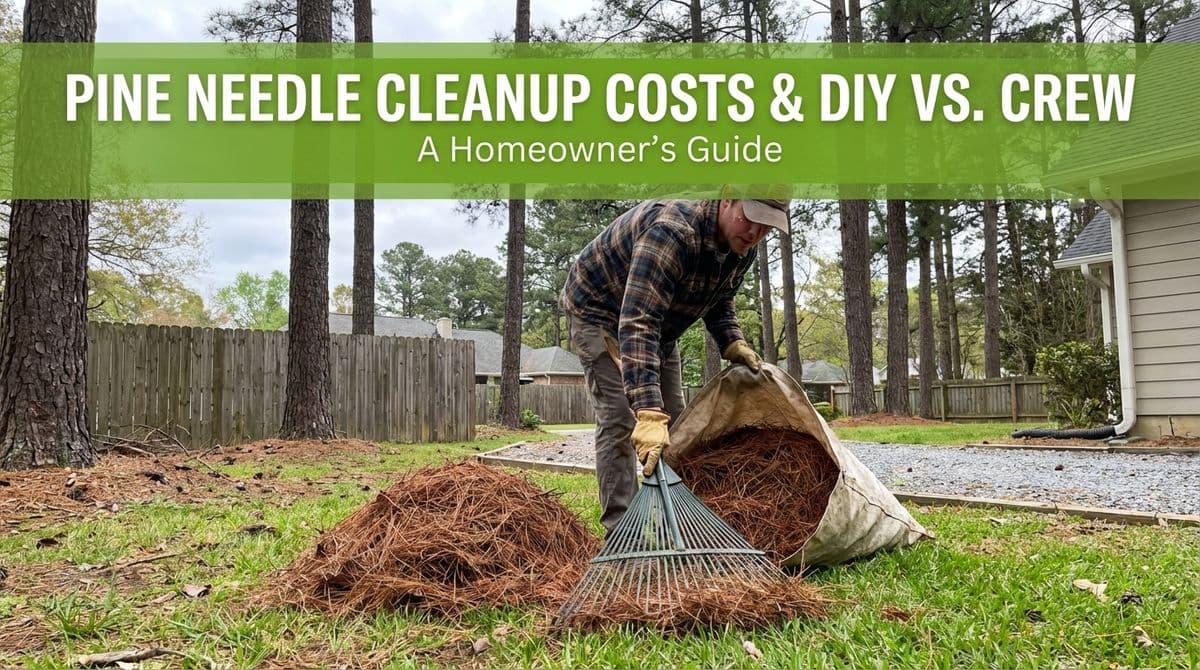
Pine Needle Yard Cleanup 101: A Real-World Insurance Crunch
We recently got a call from a homeowner — let’s call him Tom — who owns a quarter-acre lot packed with big ponderosa pines. He doesn’t live there full-time, and after years of pine needles piling up, his insurance company finally told him, “Clean it up by the end of March or else.”
Tom used to load a small drop box and haul everything himself, but between caring for family out of state and access issues (old trucks blocking gates, tight backyard, investment property he visits only every few months), the job got away from him. When we walked through the property with him, we realized his situation is exactly what a lot of homeowners are dealing with — so we’ll use his scenario to walk through costs, insurance requirements, and when to DIY versus hiring a landscaping crew.
Why Insurance Companies Care About Pine Needles
When we talked with Tom, his main question was: “Why is my insurance guy suddenly on me about pine needles?” Insurers look at heavy needle buildup as a red flag for a few reasons:
- Fire risk: Dry pine needles under big pines and around the house act like kindling. In many regions, carriers are tightening rules around defensible space.
- Liability: Thick, uneven layers of needles hide trip hazards, rocks, and roots. If someone gets hurt, it can become a claim.
- Neglect signal: An unmaintained yard can suggest bigger issues (roof, gutters, trees, etc.), so underwriters sometimes push for cleanup to keep the policy active.
In Tom’s case, his insurer gave him a deadline to get the ground cleaned up around the structures. They didn’t care as much about every last cone in the far back corner; they wanted the visible buildup and high-risk areas under control.
How “Years” of Needles Change the Cost
When we asked Tom how long it had been since his last big cleanup, he said, “Years.” That one word changes everything about price and labor.
On a typical quarter-acre lot with mature pines, here’s how buildup affects the job:
- 1 season of needles: Often a half-day to one full day with a small crew.
- Multi-year buildup: Needles are compacted, tangled with branches and cones, sometimes mixed with soil. That can mean 1–2 solid days of work for a crew, sometimes more.
- Access delays: Blocked gates, vehicles that need moving, or tight side yards add to the clock.
For Tom, we could see on satellite and street view that the lot was roughly a quarter acre with towering ponderosas and several years of accumulation. We were very honest with him: it was going to be a significant project, not a quick rake-and-go.
What “Per Man-Hour” Pricing Really Means
Tom, as an ex-contractor, immediately asked how we charge. On big, unpredictable cleanups like this, we typically bill by the man-hour, not a flat package price.
Here’s what that actually means in practice:
- Rate example: $110 per man-hour (this can vary by company and region).
- Man-hour math: If four crew members work for two hours, that’s eight man-hours total (4 × 2 = 8).
- Inclusions: We usually bundle dump fees and hauling into that rate so there are no surprise disposal charges.
- Minimums: For us, a job like this has at least a four-hour minimum, but multi-year pine buildup on a quarter acre is almost always longer.
When we explained this to Tom, it clicked for him. Instead of thinking “one hour,” he began thinking in total labor hours: how many people, for how long, including time spent driving to and from the dump.
Hauling, Dump Fees, and When a Drop Box Makes Sense
Tom had done the DIY route before with a small drop box. His question to us was whether it made sense to rent one again or just let us haul everything.
How landscaper hauling usually works
On bigger cleanups, we often:
- Load pickup trucks or dump trailers on site
- Send one person to the dump while the rest of the crew keeps cleaning
- Rotate trips so work continues steadily
The disposal fees and drive time are baked into our man-hour pricing, so homeowners don’t have to juggle separate bills or dump schedules.
When to rent your own drop box
We usually suggest a homeowner consider renting a box when:
- You’re doing most of the labor yourself and only want help with a few heavy tasks.
- Access for trucks or trailers is very tight, but a roll-off box can sit in the driveway or street.
- You’re okay managing the rental schedule and making sure it’s loaded efficiently.
If you’re already hiring a crew for a major cleanup like Tom’s, it often costs less in time and hassle to let the landscapers handle hauling and dump logistics as part of the job.
Access Challenges: Gates, Vehicles, and Investment Properties
Access was one of the biggest headaches on Tom’s project. He had an old truck in the way, a neighbor’s truck blocking the side gate, and most of the worst buildup was in the hard-to-reach back yard. This is very common with investment properties or second homes.
Here’s how access can affect your cleanup:
- Blocked gates or narrow side yards: Slows the job if everything has to be carried farther by hand.
- No one on site: If you don’t live there, crews may not be able to move vehicles, unlock gates, or adjust security systems.
- Steep slopes or uneven ground: Adds time and sometimes safety precautions.
Before scheduling, we always ask homeowners like Tom to clear what they can in advance: move vehicles, unlock gates, and let trusted neighbors or cameras know a crew is coming. A couple of hours of prep can shave a surprising amount off the final bill.
DIY vs. Hiring a Crew: How to Decide
Tom had done his own pine cleanup for years, so he was realistic about the work. For most homeowners, we suggest asking a few key questions:
- How many years of buildup? One season of needles? DIY might be very reasonable. Five years under big pines? Expect multi-day work without a crew.
- What tools do you have? Heavy-duty rakes, tarps, blowers, gloves, and a trailer or truck make a big difference.
- What’s your deadline? If an insurance company gave you a hard date, a professional crew is often the safer bet.
- How’s your health and availability? Pine cleanup is repetitive, dusty work. If you’re already stretched thin (like Tom caring for family in another state), it may be worth outsourcing.
A good compromise for some clients is a hybrid approach: we handle the heavy lifting and deep cleanup the first time, then they keep up with lighter maintenance afterward.
How to Avoid Expensive “Once-in-Years” Cleanups
Tom’s situation — years of buildup followed by an urgent insurance deadline — is something we see often. The costs are always higher than regular maintenance would have been. To avoid that, we recommend:
- Seasonal cleanups: Plan for at least one thorough cleanup in late fall or early spring, more often if you have many big pines.
- Focus zones: Prioritize areas within 30 feet of structures, walkways, and driveways to keep insurers and fire marshals happy.
- Simple tools on site: Keep a rake and a couple of tarps at the property so even a short visit can knock down the worst of the buildup.
- Recurring service: For second homes or rentals, set up a recurring service plan so you’re not caught off guard by a letter from your insurance company.
We were able to give Tom a clear estimate based on man-hours and get his property on the schedule before his insurance deadline. With a little ongoing maintenance after this big reset, he won’t have to face another multi-year, full-yard pine cleanup anytime soon.