Why Yard Debris Doesn’t Belong in the Street
Blowing leaves and grass into the street seems harmless, but it can be unsafe, messy, and even illegal. Here’s what responsible, neighbor-friendly lawn care should look like.
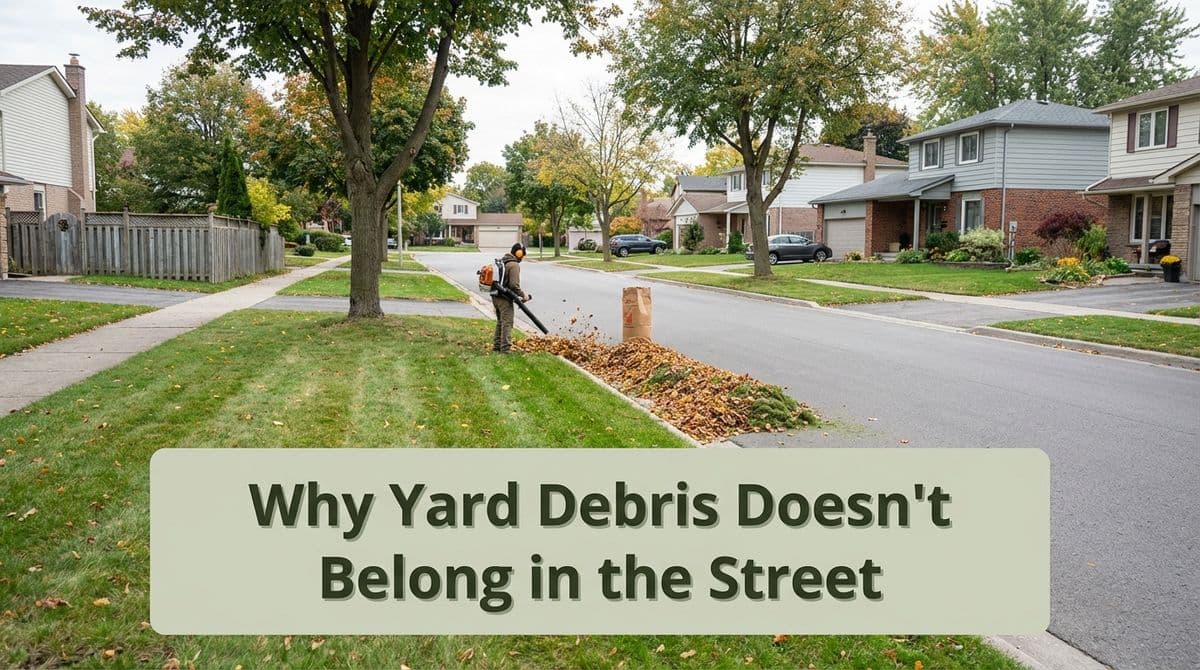
When a Neighbor Calls About Our Leaf Blower
We recently got a call from a neighbor on one of our routes — let’s call her Amy. She wasn’t our customer; we service a house down the street from her. Amy told us that every time our crew came by, they were blowing leaves and grass clippings into the street and then driving away.
She described driving home one day and seeing a track of debris follow her tire all the way into her garage. This winter, it wasn’t as bad, but she’d seen big piles in the past. She also made it clear she understood that a little debris is inevitable — what concerned her was that it looked intentional and wasn’t getting cleaned up.
That call was a good reminder of why responsible lawn care doesn’t end at the edge of the property line, and why blowing yard debris into the street is a bigger problem than many people realize.
Why Blowing Yard Debris in the Street Is a Big Problem
Amy’s frustration is something we hear often, especially in neighborhoods with regular lawn services. Pushing grass, leaves, and landscape debris into the street might seem harmless, but it causes several issues:
- Safety hazards: Wet leaves and grass clippings can create slick surfaces. On a bike, motorcycle, or even a car braking hard, that slippery layer can be dangerous.
- Clogged storm drains: When debris is blown toward the curb, it tends to collect in gutters and storm drains. That can lead to standing water, localized flooding, and backups after heavy rain.
- Neighborhood aesthetics: One messy curb line quickly makes an entire street look poorly maintained, even if every homeowner is paying for lawn care.
- Potential code violations: Many cities have ordinances against putting yard waste in streets or gutters. Fines can apply to the homeowner, the contractor, or both.
From our perspective as a lawn care company, debris left in the street doesn’t just reflect on one property — it reflects on our professionalism to the whole neighborhood.
What Local Rules Usually Say About Yard Waste
While every municipality is different, a few common rules tend to show up in city codes:
- No blowing or dumping into the right-of-way: Streets, sidewalks, and gutters are usually considered public right-of-way and must be kept clear.
- Keep storm drains clear: It’s often illegal to place anything that could block drainage into or around storm drains.
- Use approved disposal methods: Cities frequently require yard debris to be in green bins, paper leaf bags, or taken to a composting facility.
If you’re unsure about your area, look up your city’s solid waste or stormwater regulations — or call and ask directly whether blowing clippings into the street is allowed. In most cases, the answer is no.
Responsible Leaf Blower Practices for Crews and Homeowners
On our call with Amy, we explained that a small amount of material might escape during clean-up, but that our goal is always to collect the bulk of it. Here’s what responsible blower use should look like, whether it’s you or your lawn service:
- Blow debris onto a tarp or into piles on the lawn or hard surfaces, not into the street.
- Rake or vacuum up the piles and place them into bags, bins, or a dedicated debris container.
- Finish with a detail pass along sidewalks, driveways, and curb lines to pull debris back from the street and gutter.
- Avoid aiming the blower nozzle directly toward the curb or storm drains.
The blower should be a tool for gathering debris, not for hiding it off the property.
How Much Debris Left Behind Is “Normal”?
Amy made a very fair point: it’s almost impossible to pick up every leaf or blade of grass. So where’s the line between normal and poor service?
In our view:
- Normal: A light dusting of small clippings or a few stray leaves that will blow away or break down quickly; nothing in obvious piles or windrows.
- Poor service: Visible ridges of clippings along the curb, piles in the gutter, or enough debris that you track it onto your driveway or into your garage — exactly what Amy described.
If you can clearly see where the blower pushed material into the street, that’s not just “leftover” — it’s a sign that cleanup wasn’t done right.
How to Talk to Your Lawn Service About Street Debris
One thing we really appreciated about Amy’s call was her tone. She was direct but respectful, and she made it clear she understood the work is hard — she just wanted it done responsibly. That kind of conversation is the model we recommend.
Here are a few tips if you see your lawn service blowing debris into the street:
- Be specific: Mention where you’re seeing the problem (for example, “along the curb in front of my driveway” or “down the whole block”).
- Describe the impact: Explain if you’ve tracked it into your garage, seen puddling at the drain, or noticed the street looking messy after each visit.
- Clarify your expectations: Let them know you expect debris to be collected and not left in the street or gutter.
- Ask about their policy: A reputable company should have clear standards and be willing to retrain staff, just as we did after Amy’s call.
If your provider gets defensive or dismissive, that’s a red flag. You’re not asking for anything unreasonable — you’re asking them to do the job correctly.
Environmentally Friendly Ways to Handle Leaves and Clippings
Keeping debris out of the street doesn’t mean everything has to go in the trash. There are greener options that actually benefit your yard:
- Mulching: Mow leaves into small pieces and leave grass clippings on the lawn (in thin layers). They break down and return nutrients to the soil.
- Composting: Collect leaves and untreated clippings in a compost bin or pile to create rich organic matter for your garden beds.
- Green waste pickup: Use your city’s yard debris bin or paper lawn bags for curbside collection if available.
However you choose to handle it, the key is simple: keep yard debris on your property or in proper collection systems — not in the street.
Our Commitment to Better Lawn Care
After talking with Amy, we immediately followed up with our crew, reviewed our blower practices, and reinforced the standard: no intentional blowing of debris into the street or gutters, and a final cleanup pass along the curb line every visit.
As a homeowner, you should expect the same from any lawn service you hire. If you ever see us — or any crew — leaving the street worse than they found it, speaking up like Amy did is one of the best things you can do for your neighborhood.