Fall Fertilizer Tips for Bend Lawns: Timing, Rates, and the Mistake Most Homeowners Make
Fall feeding builds roots, not blades. Seven fertilizer tips for Bend lawns, including the square-footage mistake that burns small NorthWest Crossing yards.
Fall Fertilizer Tips for Bend Lawns: Timing, Rates, and the Mistake Most Homeowners Make
Ask ten Bend homeowners when they fertilize and nine will say spring. Ask Oregon State University Extension and you get a different answer: the fall applications are the ones that matter most, and in Central Oregon they are also the ones most often skipped.
Here are seven things worth knowing before you put anything down this October, plus the one mistake that undoes a whole season of work.
1. Fall fertilizer feeds roots, not blades
This is the concept everything else hangs on. In spring, nitrogen goes straight into top growth. You get a green lawn and a lot of extra mowing, and the plant spends its energy on leaves.
In fall, once air temperatures drop but soil is still warm, the grass stops pushing blade growth and starts storing carbohydrates and building root mass. Nitrogen applied in that window goes into the root system and into next year's density. It is the same fertilizer doing a completely different job.
That stored energy is what produces an early, even green-up in April without you doing anything. A lawn that got fed properly in October simply wakes up earlier than the one next door.
2. Central Oregon's window is September through early December, in two parts
OSU Extension's lawn maintenance calendar for Central Oregon splits fall feeding into two applications, and they do different things.
The first goes down in September or October, while the soil is still warm enough for the roots to actively take it up. The second, often called a winterizer, goes down from mid-November into early December, after top growth has essentially stopped.
Skipping either one is common. Skipping the November application is the more costly mistake, because that is the one doing the most root work.
3. One pound of nitrogen per 1,000 square feet is the unit that matters
Bag instructions are written for the national market. The number to work from is one pound of actual nitrogen per 1,000 square feet per application. OSU notes that fall applications can run heavier than the in-season ones, which is part of why fall feeding carries so much weight.
To get there, read the first number in the N-P-K ratio on the bag. A 25-5-10 product is 25 percent nitrogen, so you need roughly four pounds of product to deliver one pound of nitrogen. Most homeowners never do this math and simply spread until the bag is empty, which is how lawns get striped, burned, or fed at triple the intended rate.
4. Your NorthWest Crossing lawn is smaller than you think
This is where NWX specifically gets people in trouble.
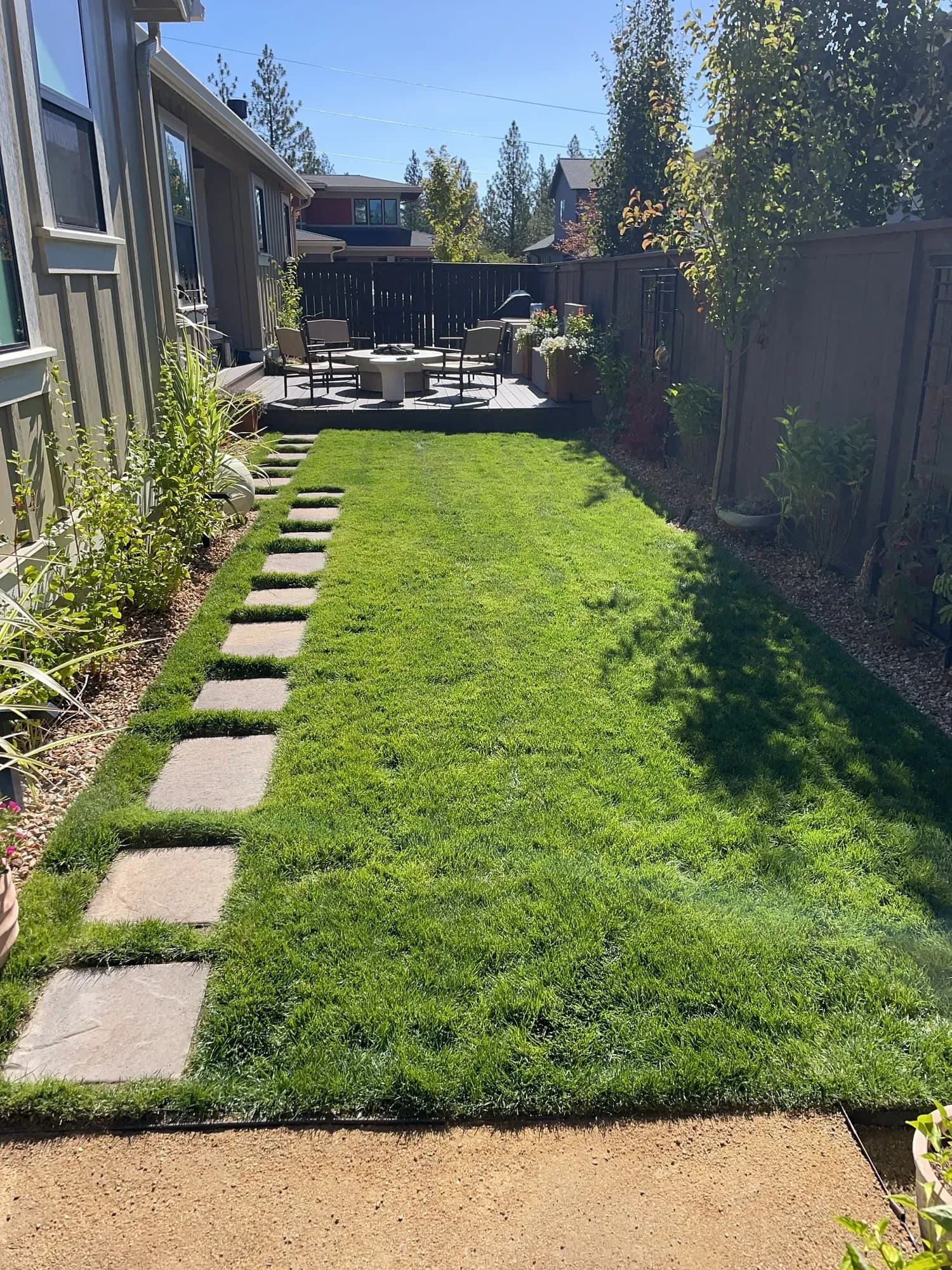
NorthWest Crossing lots are compact and alley-loaded, with a meaningful share of each property given over to hardscape, planting beds, street trees and the front porch setback that gives the neighborhood its character. The actual turf area on a typical NWX home is often well under 2,000 square feet, sometimes closer to 1,200 once you subtract beds and pathways.
A homeowner who buys a bag rated for 5,000 square feet and applies the whole thing to an NWX front and back yard has just put down three or four times the intended rate. On a small lawn, over-application does visible damage fast, and the neighborhood's design standards mean everybody sees it.
Measure before you spread. Length times width, minus beds and hardscape. It takes five minutes and it is the single highest-value thing in this article.
5. Water it in, and remember your irrigation window is closing
Granular fertilizer needs to be watered in to move off the blade and into the soil. Roughly a quarter inch is enough.
The complication in Bend is that your irrigation blow-out is happening in early to mid October. That gives you a narrow overlap where the fertilizer is down and the system is still live. Once the system is blown out, you are relying on rain or dragging a hose out in 30 degree weather.
Sequence matters. Fertilize, water it in, then blow out. Doing it in the other order means a granular application sitting dry on the surface waiting for weather.
6. Do not fertilize a lawn that is already dormant or frozen
If the ground is frozen or the lawn has gone fully dormant and brown, the application is wasted. Worse, on any property with grade it can run off rather than soak in.
In Bend this is mostly a December problem. If you are still thinking about your first fall application at Thanksgiving, you have missed the first window entirely and should focus on getting the winterizer down before the ground locks up.
7. The mistake most homeowners make: skipping fall, then doubling in spring
Here is the pattern we see constantly. A homeowner skips fall entirely because the lawn is going dormant and it feels pointless. Spring arrives, the lawn looks thin and slow, and they compensate with a heavy spring application.
That is backwards on both ends. The heavy spring feed drives excessive top growth, which means more mowing, more water demand heading into a high desert summer, and a shallower root system going into July, when Central Oregon lawns need five to seven inches of water a month just to hold on.
Fall feeding builds the roots that carry a lawn through a Bend summer. Spring feeding mostly makes you mow more.
How we handle it
Edge builds three fertilizer applications into every recurring maintenance agreement, timed to the property rather than to a calendar reminder. Rates are calculated against your actual measured turf area, sequenced around your irrigation blow-out date, and adjusted for the grass type on your lot.
There is no separate fertilization invoice and no seasonal upsell call. The applications are inside the flat monthly rate, which means nobody is deciding in October whether this year's feeding is worth the money. Edge Landscaping is licensed, bonded and insured, and we have not missed a scheduled job since we opened in 2020.
"Edge has taken great care of our yard. They are proactive, always anticipating the change of season coming up."
Jane R., Google review
Get your fall applications scheduled
If you would rather not measure square footage and calculate nitrogen rates in October, call Edge Landscaping at (541) 678-1248 or request a quote through our site. We serve Bend and Redmond, including NorthWest Crossing, Discovery West, Tree Farm, Tetherow, Broken Top and Awbrey Butte.