The Last Mow of the Year in Bend: 6 Tips to Set Up a Better Spring
There is no calendar date for the final cut in Central Oregon. Six tips on height, debris and timing that decide what your lawn looks like next April.
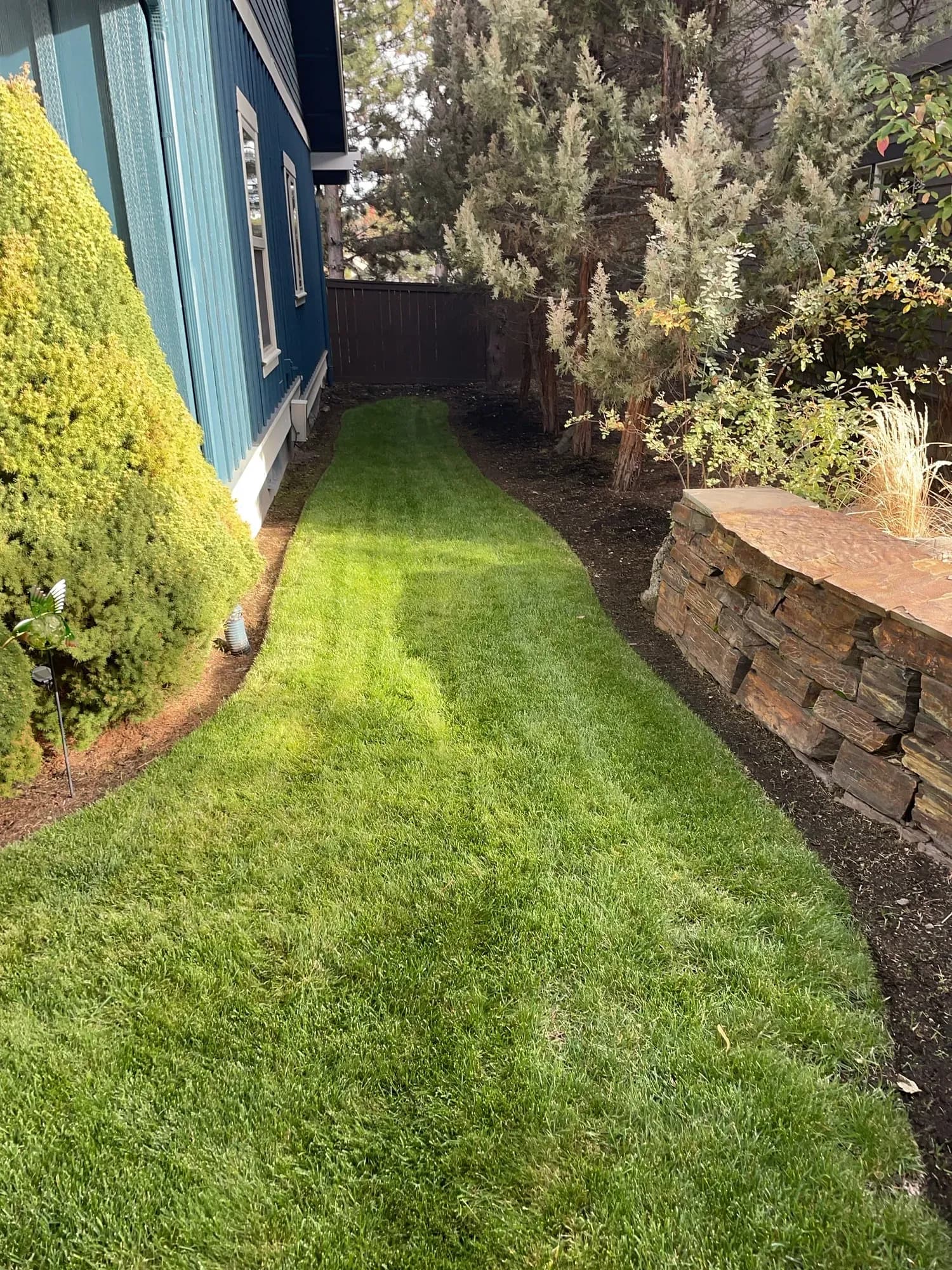
Lawn mowing in Bend, Oregon peaks in May and June at four to six mowings a month and tapers to zero by November or December, according to the OSU Extension calendar for Central Oregon. The last cut of that taper does more for next spring than any single mow in July. Get it right and the turf goes under snow clean and at the correct height. Get it wrong and you are repairing it in April. Six tips for calling it correctly.
1. Call It Off the Lawn, Not the Calendar
There is no date for the last mow. Growth slows when soil temperature drops and daylight shortens, and that happens on different weeks in different years and on different parts of the same property. Our crews keep visiting and cut when there is something to cut. Some years the last real mow is the second week of November. Some years it is late October. A landscaper who tells you in August exactly which week they will stop is managing their schedule, not your lawn. The cost of one extra visit in November is one mow. The cost of stopping three weeks early is a shaggy, uneven lawn folding over under the first snow.
2. Do Not Scalp the Final Cut
The persistent myth is that you should cut the lawn very short going into winter. OSU's recommended range for perennial ryegrass, fine fescues and Kentucky bluegrass is 1.5 to 2.5 inches, and the last cut belongs inside that range. Taking it lower exposes the crowns, removes the leaf tissue the plant uses to store energy, and opens the canopy to whatever weed seed is waiting. Cut at the lower end of your normal height if you want, but stay in the range. There is more on this in our mowing height tips for a Central Oregon summer.
3. Keep the Height Consistent as You Taper
The other half of the height question is the approach. Dropping from three inches to 1.5 inches in one pass in late October removes far more than a third of the leaf blade and stresses a plant that is already shutting down. If your summer height ran high, step down over two or three of the final mows instead of one. By the last cut you want an even, slightly shorter canopy that will not fold over and mat when snow lands on it. Blade sharpness matters more than usual here, because cold, tough late season grass tears instead of cutting cleanly, and torn tips brown off and sit on the surface all winter.
4. Get the Debris Off Before the Last Cut, Not After
A lawn that goes under snow with leaves, needles and clipping piles on it is a lawn that comes out in March with matted gray patches. The mower can help by picking up light debris, but heavy drop needs raking, and that is a separate job from mowing. Do the clean up first, then cut, then blow the hardscapes. The order matters because a final mow over a wet leaf layer just chops the layer into smaller pieces and presses it in.
5. Do Not Leave Windrows or Clipping Piles
Light clippings left on the lawn during the growing season return nitrogen and are fine. Clippings left in a windrow on the final cut are not. Late season growth is wetter, it does not dry out at high desert speed in November, and a dense line of wet clippings sitting against the crowns under snow is the ideal setup for snow mold. If the final mow leaves rows, they need to be broken up or removed before the crew leaves.
6. Pair the Last Mow With the Blow Out
The irrigation blow out window in Bend runs from the first week of October to roughly October 20, which lands right in the middle of the mowing taper. Those two jobs belong on the same schedule. A system that is still pressurized when the first hard freeze arrives is a repair bill, because water expands about nine percent when it freezes and that is more than enough to split a lateral or crack a backflow body. Our complete guide to irrigation blow outs in Bend covers the deadline in detail.
The Last Mow in Discovery West
Discovery West lawns are usually small, recently installed, and surrounded by xeriscape. That combination changes the taper. Young turf on newer soil has a shallower root system and is more sensitive to a hard final cut, so our crews stay conservative on height there. The heavily zoned irrigation systems common in the neighborhood also mean the blow out takes longer than on an older three zone system, so we book those visits early in the October window rather than late. The winter lawn care tips for Bend post covers what happens on those properties after the mowing stops.
Included, Not Invoiced
Weekly mowing, bi weekly edging, weekly raking, weekly blowing of hardscapes, fall clean up and the irrigation blow out are all part of recurring maintenance under your flat monthly rate. Nothing about the last mow of the year generates a separate invoice, and nothing about it gets skipped because the visit count is dropping. The agreement structures are laid out on our services and pricing page.
"The whole team at Edge Landscaping does a great job on our weekly landscaping service."
Tom A., Google review
Book the Rest of Your Season
Call Edge Landscaping at (541) 526-0922 to get the last mow, the clean up and the blow out on one schedule. We serve Bend and Redmond, including NorthWest Crossing, Discovery West, Tree Farm, Tetherow, Broken Top and Awbrey Butte.
Edge Landscaping is licensed, bonded and insured in Oregon, LCB #100442.