Licensed, Bonded and Insured: Why Bend Tree Work Isn't a DIY Job
Licensed, bonded and insured is not marketing language until a limb goes through a roof. Why Bend tree work belongs on a recurring agreement, not a ladder.
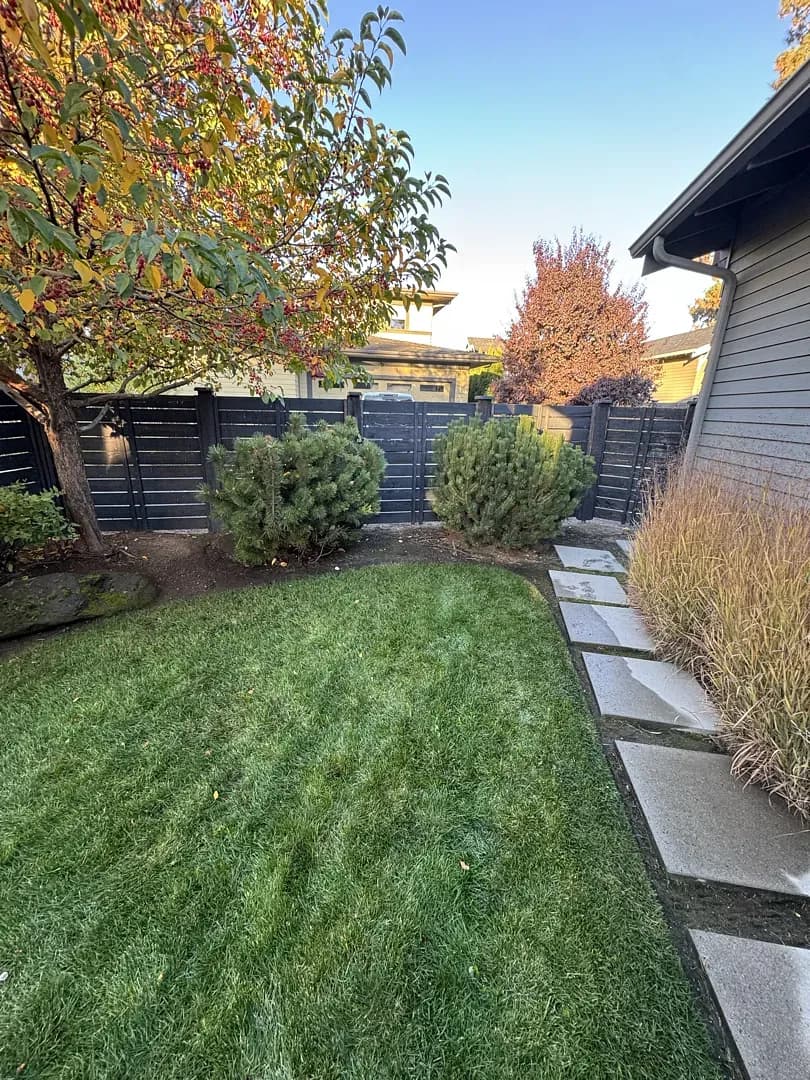
Tree trimming in Bend, Oregon is the one landscape task where a bad Saturday costs more than money. Edge Landscaping is licensed, bonded and insured, Oregon LCB #100442, has maintained more than 200 properties weekly since 2020, and has never missed a scheduled job. Those three facts are the entire argument for why the tree work on your property should be handled on a recurring agreement instead of with a rented pole saw. Here is what each of them actually protects.
Licensed, Bonded and Insured Is a Status, Not a Slogan
Licensed means the company is registered to do this work in Oregon and answerable to a regulator. Bonded means there is a financial instrument behind the contract if the work is not performed. Insured means that if a limb comes down through your neighbor's sunroom, a claim gets paid by an insurer instead of becoming a conversation between two homeowners.
When an uninsured crew works on your property, the exposure lands on you. When you do the work yourself, your homeowner policy may or may not respond to an injury or to damage caused by a cut you made, and you find out which one after the fact. This is the part of the pitch that sounds like boilerplate until the day it is the only thing that matters. Ask any Bend contractor for a license number and a current certificate of insurance before they touch a tree on your property. A company actually carrying coverage can produce both in a few minutes. Our about us page covers how the company is set up.
Monthly Trimming Is Already in Your Agreement
Recurring maintenance at Edge includes monthly trimming of trees and monthly pruning of ornamentals. That structure is what keeps tree work from becoming an event. A tree that gets looked at twelve times a year rarely needs a dramatic intervention, because the crossing branch gets removed while it is a quarter inch thick and the deadwood comes out before it is hanging over the walkway.
The homeowners who end up on a ladder with a chainsaw are almost always the ones whose trees have not been touched in four years. By then the work is genuinely dangerous, and it is dangerous specifically because it was deferred. The right time to remove a branch is the year it becomes a problem, not the year it becomes a hazard. Spreading the work across twelve visits also spreads out the decisions, so nothing gets settled in one afternoon by a homeowner who wants to be done.
What Twenty Six Years of Crew Experience Accounts For
Edge crews carry 26 years of combined experience, led by crew lead Memphis. On tree work in Bend, that experience is mostly about anticipating what a cut does before it is made.
Mature junipers are heavier than they look and brittle at the union. Ponderosa limbs hold a lot of weight far out from the trunk and will barber chair on a bad face cut. Aspens and birches, common in Bend landscapes, cannot be cut in the wrong season without inviting borers, which is why our summer tree trimming guide spends most of its length on timing. A homeowner with a good saw and no read on lean, tension and spring back is operating without the part of the job that matters.
The Cuts You Cannot Take Back
Pruning is subtractive. A flush cut that removes the branch collar does not heal, it seals slowly and invites decay into the trunk. Topping a tree to control height produces a cluster of weak, fast growing shoots attached at the surface, and those are the limbs that fail in a wet Bend snow load. Cutting a spring flowering shrub in March removes the flowers you were waiting for. Taking more than about a quarter of a mature canopy in one season pushes the tree into a stress response you will be managing for years.
Timing is local. The dormant window for structural cuts in Central Oregon is real and narrow, and our dormant pruning guide for January explains why crews wait for it. Edge crews make these calls on a recurring visit, in season, on a property they already know.
Tree Work on Awbrey Butte
Awbrey Butte concentrates every complicating factor at once. Steep grade means a ladder rarely sits level and a dropped limb keeps going downhill. Rock outcroppings eliminate the landing zones you would otherwise use. Mature junipers grow into and over rooflines and utility drops. The landscapes are established and high value, so a limb that lands wrong takes out fifteen years of planting. North facing shade pockets stay icy well past the rest of the property, which makes winter access its own hazard.
Our crews work these lots on a set weekly rotation, so tree work happens in small increments across the year instead of in one high risk day.
Included, Not Invoiced
Monthly tree trimming and monthly ornamental pruning are covered by your flat monthly rate. There is no per tree charge, no seasonal pruning package, and no upcharge for the services a property needs that year. Whether your lot has four ornamentals or forty, the number on the invoice is the same every month, and it does not change because your junipers had a big year. Pricing and agreement structures are on our services page.
"I am so impressed with Edge Landscaping's attention to detail and care for my property."
Rick H., Google review
Put the Saw Down
Call Edge Landscaping at (541) 526-0922 and get your tree work handled by a licensed, bonded and insured crew on a recurring schedule. We serve Bend and Redmond, including NorthWest Crossing, Discovery West, Tree Farm, Tetherow, Broken Top and Awbrey Butte.