5 Things Debris on Your Pavers Does Over a Bend Winter
Water expands nine percent when it freezes, and the debris on your patio decides where that water sits. Five things a winter of neglect does to pavers.
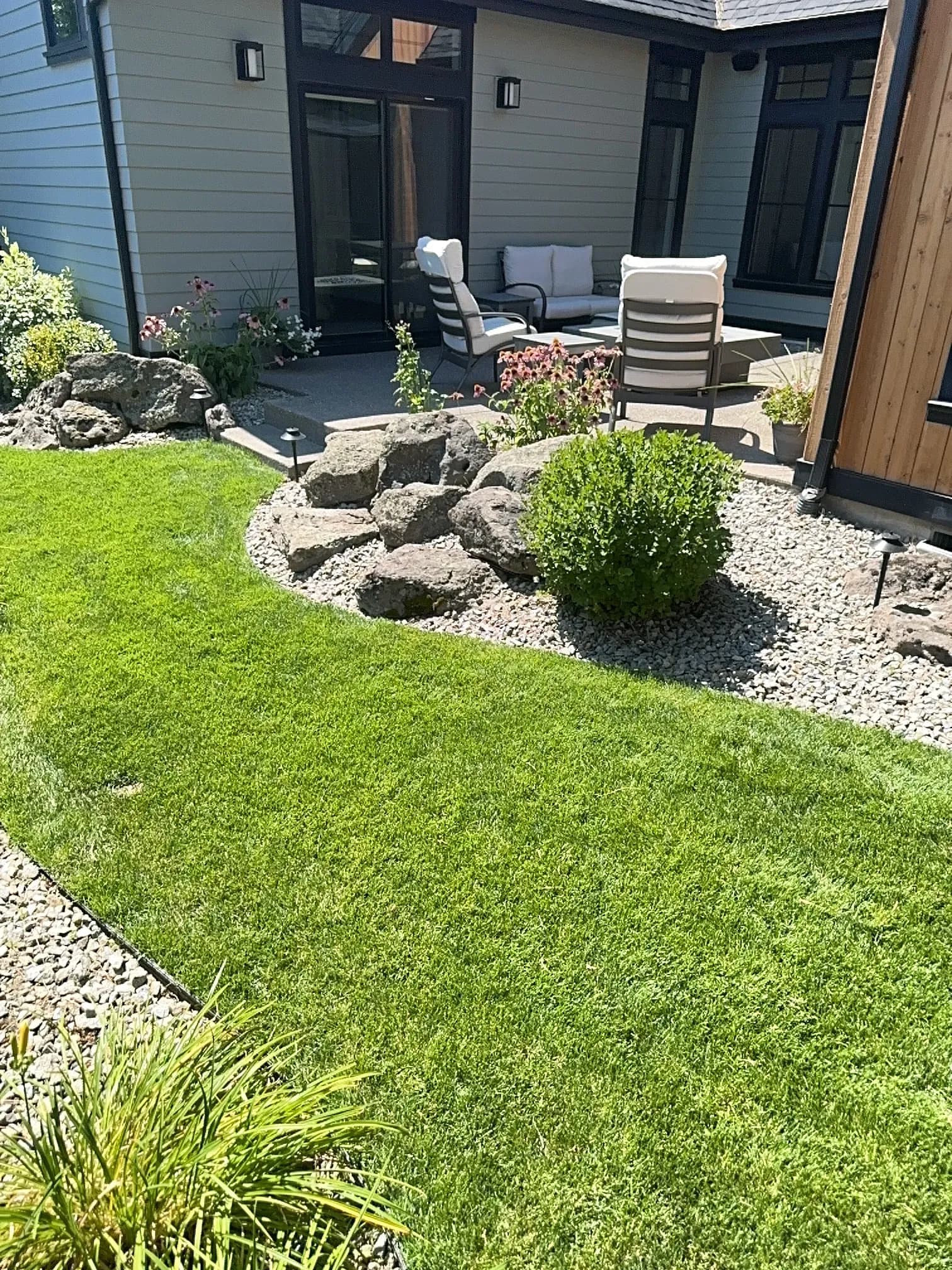
Hardscape cleaning in Bend, Oregon gets treated as a cosmetic job, which is why so many paver patios look ten years old at year five. Water expands about nine percent when it freezes, and every Central Oregon winter runs that cycle across dozens of nights. Debris left on a hardscape is what decides whether that water drains away or sits in the joints doing work. Here are five specific things a layer of needles and leaves does between November and March.
1. It Holds Water in the Joints That Need to Drain
A paver system is designed to shed water off the surface and pass the rest through the joints into the bedding layer. A mat of wet needles and leaves defeats both. The surface cannot shed because the mat holds the water in place, and the joints cannot drain because the mat has packed organic fines into the top of them. That trapped water is then sitting in a confined space every night that drops below freezing, expanding roughly nine percent each time, and pressing outward on the paver edges. Freeze and thaw does not damage a dry, clean hardscape nearly as fast as it damages a dirty one.
2. It Stains, and Some of It Is Permanent
Wet leaves and ponderosa needles leach tannins. On a light colored concrete paver, a maple leaf sitting for four months under snow leaves a brown outline you can still read in June. Needle mats leave a wide rust colored discoloration. Some of it comes up with a proper cleaning, some of it has already penetrated the surface of the paver and is now part of the paver. Sealed hardscapes resist this longer, but sealer wears, and the areas that see the most debris are usually the shaded areas where the sealer has degraded most. The only reliable fix is removal before the debris gets wet and stays wet, which in Bend means clearing weekly from September through the first snow.
3. It Becomes a Seed Bed in the Joints
Every joint on your patio is a narrow container of sand. Add a winter's worth of decomposing organic matter on top and you have built a planting bed, one that is warmer and better drained than the soil around it. That is why patio weeds come up in the joints first and why they come back after you pull them: the growing medium is still there. Clearing debris in the fall is the cheapest weed control on a hardscape, and it works better than anything you can spray in the spring. It is the same dynamic that turns clean rock into a weed bed, covered in our post on rock bed maintenance in Bend.
4. It Builds an Ice Layer You Cannot Remove
Snow falling on a clean paver surface gets shoveled or plowed to the surface. Snow falling on a debris mat cannot be cleared to the surface, because the shovel stops on the mat. What is left behind is a composite layer of frozen needles, leaves and compacted snow bonded to the pavers. De icing product performs poorly against it, chipping at it damages paver edges, and it usually stays until a sustained thaw. On walkways it is also the slipperiest surface on the property, and choosing the right de icing approach matters more once that layer has formed.
5. It Pushes Out Joint Sand and Lets Pavers Move
Joint sand is what locks a paver field together and lets it behave as one surface. Organic debris packed into the joint displaces sand, holds moisture against it, and encourages it to wash out during melt. Lose enough joint sand and individual pavers start to rock under foot traffic, edges chip against each other, and the field opens up. At that point the fix is sweeping in new polymeric sand across the whole patio, not a cleanup. The edges and the outside course go first, because they have the least lateral support holding them in line. Five winters of debris is the difference between a hardscape that needs a rinse and one that needs a rebuild.
Hardscape Work in NorthWest Crossing
NorthWest Crossing is where this matters most, because NWX properties are mostly hardscape. Compact alley loaded lots, front porch setbacks, narrow side yards and patios mean the actual turf is often under 2,000 square feet while pavers, walkways and the alley apron make up the majority of the ground plane. Street trees line the sidewalks and drop directly onto it. On these properties, hardscape blowing is not a finishing touch at the end of the visit, it is most of the visit, and the tight access means it is done with backpack blowers and hand work rather than equipment. Alley aprons collect the most and get looked at the least. Our fall clean up post covers how that fits into the wider seasonal work.
Blown Every Visit, Included
Weekly blowing of hardscapes is part of recurring maintenance at Edge and is covered by the flat monthly rate. It happens every visit, all year, including through winter, alongside weekly raking and snow removal. There is no separate patio cleaning charge and no seasonal hardscape package, because a surface that gets cleared weekly never needs one. You can see what recurring maintenance includes on our services and pricing page.
"I am so impressed with Edge Landscaping's attention to detail and care for my property."
Rick H., Google review
Get Your Hardscapes Clear Before the Snow
Call Edge Landscaping at (541) 526-0922 to get on a weekly route. We serve Bend and Redmond, including NorthWest Crossing, Discovery West, Tree Farm, Tetherow, Broken Top and Awbrey Butte.
Edge Landscaping is licensed, bonded and insured in Oregon, LCB #100442.