7 Reasons Ponderosa Needles Are Worse for Your Lawn Than Leaves
Leaves fall for three weeks. Ponderosa needles fall all year, mat like felt, and take years to break down. Seven reasons they are the harder Bend problem.
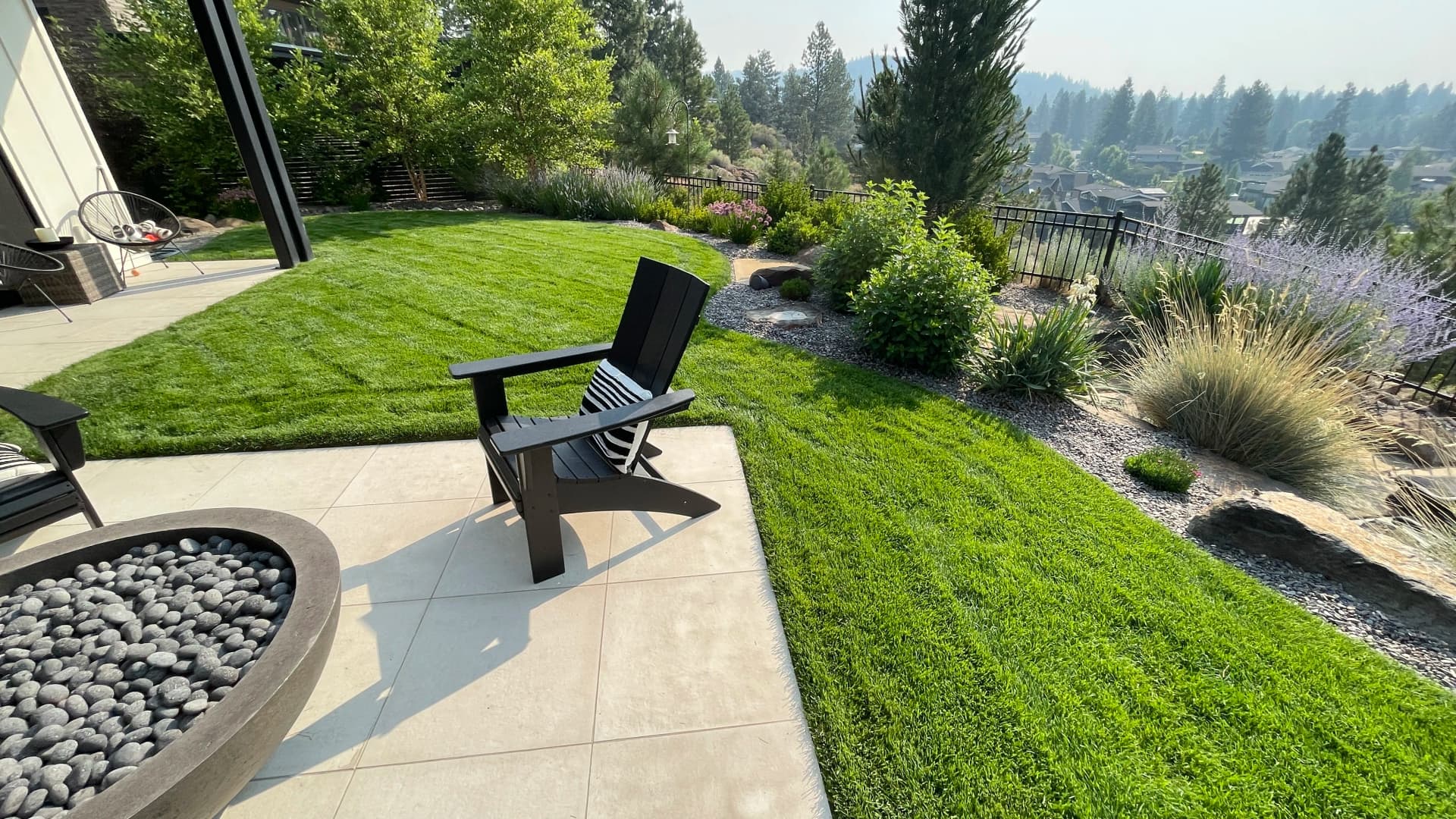
A mature ponderosa drops needles in every month of the year, which is why pine needle removal in Bend, Oregon is a weekly job rather than a fall project. Deciduous leaves arrive in a two or three week rush, break down quickly, and are finished. Ponderosa needles behave nothing like that. They are long, waxy, slow to rot, and they keep falling while you are shoveling the driveway. Here are seven reasons they are the harder problem.
1. They Fall Twelve Months a Year
Ponderosa pines shed their oldest needles continuously and then push a heavier drop in late summer and fall, usually starting before Bend's first frost risk window opens around September 3. There is no tidy end date. A homeowner who schedules one big cleanup in late October has already let eight weeks of needles sit on the turf, and will have another six weeks of drop before the first plowable snow arrives in early November. Leaves give you a deadline. Needles give you a season.
2. They Interlock Instead of Layering
A leaf lies flat and overlaps the leaf next to it. A ponderosa needle bundle is three stiff needles fused at the base, five to ten inches long, and when thousands of them land together they weave. The result is a mat with structure, not a pile. You can lift a square foot of it off a lawn in one piece. That woven mat is why raking needles takes longer than raking leaves over the same area, and why a leaf blower alone often just moves the mat rather than breaking it up.
3. The Mat Sheds Water Instead of Passing It
Needles carry a waxy cuticle that helps the tree hold moisture in a high desert climate. Once they are matted on turf, that same wax works against you. Irrigation and rainfall run off the mat and find the low spot instead of soaking into the root zone underneath. In July, when Bend turf needs five to seven inches of water for the month, a needle mat over part of the lawn means part of the lawn is being watered and part is not. The dry patch shows up in August and gets blamed on the sprinklers.
4. They Decompose on High Desert Time
Bend sits at 3,623 feet in a dry climate with cold nights, and organic matter breaks down slowly here. Maple leaves mulched into a lawn can be gone in a season. Ponderosa needles are resinous and high in lignin, and in Central Oregon they can sit recognizable for two or three years. That means the mat you leave this fall is still partly there next fall, stacked under a new one. This is the core reason mulching needles into a lawn does not work the way mulching leaves sometimes can.
5. They Smother Crowns Right Before Snow
The worst timing problem is that the heaviest drop lands just before the turf goes dormant and snow arrives on top. A needle mat pressed flat under snow holds moisture against the crown of the grass in the dark, at temperatures right around freezing, for weeks. That is the exact set of conditions that produces the matted, straw colored patches homeowners find in March. Most of what looks like winter kill on a treed Bend lot traces back to debris that was never pulled off before the snow set, and the signs of snow mold in a Bend lawn are easy to trace back to October.
6. They Are Fuel, and They Collect Where It Matters
Needles gather in the places that matter most for fire: roof valleys, gutters, the base of the siding, under decks, and in the first five feet around the house. Dry ponderosa needle litter ignites fast and carries flame along the ground. On acreage with a native edge, keeping that litter moving off the property is not landscaping housekeeping, it is defensible space work that happens to look tidy. Leaves rarely accumulate in the same volume or in the same critical spots.
7. They Get Into Rock, Gravel and Irrigation
Needles are thin enough to drop between three quarter inch rock and disappear below the surface, where a blower cannot reach them. They build a layer of decomposing organic matter under the rock that eventually grows weeds, which is how a clean rock bed turns into a weed bed in three years. They also collect around pop up heads and in valve boxes. Rock bed and gravel maintenance in Bend is largely a needle problem, and hand work is the only thing that solves it.
Needle Removal on a Tree Farm Property
Tree Farm lots are the extreme version of all of this. Large acreage, mature ponderosa, a native edge that feeds more litter in on the wind, and long irrigation runs threading through rock and gravel. A single mature tree can drop enough in a season to bury a small planting bed. On these properties our crews work the turf, the rock, the drive edges and the structure zone on the same weekly visit, so the volume never gets ahead of us. One annual blitz on a Tree Farm lot is not a cleanup, it is an excavation.
Weekly Raking, Included, Not Invoiced
Weekly raking, weekly blowing of hardscapes, weekly weed pulling and weekly weed spraying are all part of recurring maintenance at Edge, and they are covered by your flat monthly rate. There is no seasonal needle surcharge and no separate line item when the drop gets heavy in September and October. That is also true of the fall clean up, which is included rather than quoted. You can see how the agreements are structured on our services and pricing page.
"The Edge landscaping crew did an excellent job on my back and front yards. All the leaves, pine needles and cut grass were removed. My yards look clean and amazing."
Megan S., Google review
Get Ahead of the Drop
Call Edge Landscaping at (541) 526-0922 to get on a weekly route before the heavy needle fall. We maintain more than 200 properties every week in Bend and Redmond, including NorthWest Crossing, Discovery West, Tree Farm, Tetherow, Broken Top and Awbrey Butte.
Edge Landscaping is licensed, bonded and insured in Oregon, LCB #100442.